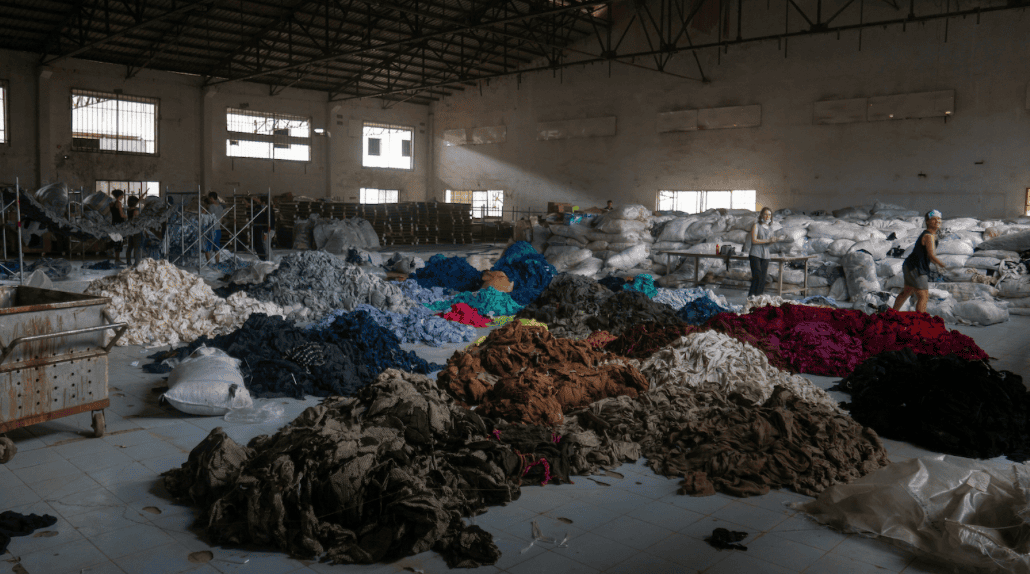

For years, Textile waste has remained the most invisible part of India’s waste problem.
Unlike Plastic, which people could see piling up in streets or oceans, old clothes quietly disappeared from wardrobes and found their way into landfills. Most people never think about the path of a cloth from wardrobe to its disposal. There has never been an organised system for donating, recycling or repurposing textiles at scale, so disposal became the only feasible solution.
The problem has always existed but people didn’t know about it. This began to change when the Delhi government intensified its efforts to tackle the city’s overflowing landfills. One of the key solutions has been bio mining. It refers to collecting decades old waste, segregating it into different material labels and then recovering whatever can be reused and up cycling the rest. Beyond the reduction of the volume if textile waste, bio mining also offered a clear understanding of what was actually going on with Delhi’s landfills.
As the government began analysing the waste, a key statistic emerged. This stated that about 10-15% of the Indian waste stream was made up of textiles.
The share was large considering the kind of attention it received. This finding shifted the conversation around waste systems in India. Textile waste was no longer invisible by production of over consumption. It had now been recognised as an environmental challenge that needed to be addressed.
Identification was only the first step. Solution came when we asked a question: How can you make responsible disposal a habit for Indian citizens.
The solution was simple, a lot of citizens were willing to donate their clothes but they never became a part of the sustainable lifestyle because of inconvenience. The Chief Minister’s office at Delhi wanted to change this by making sustainability effortless.
The idea was simple, every day millions of people use Delhi metro as a way of commuting. The metro stations have already been placed strategically. Rather than expecting people to seek our donation and recycling centres, why not bring the collection points to their everyday visit place.
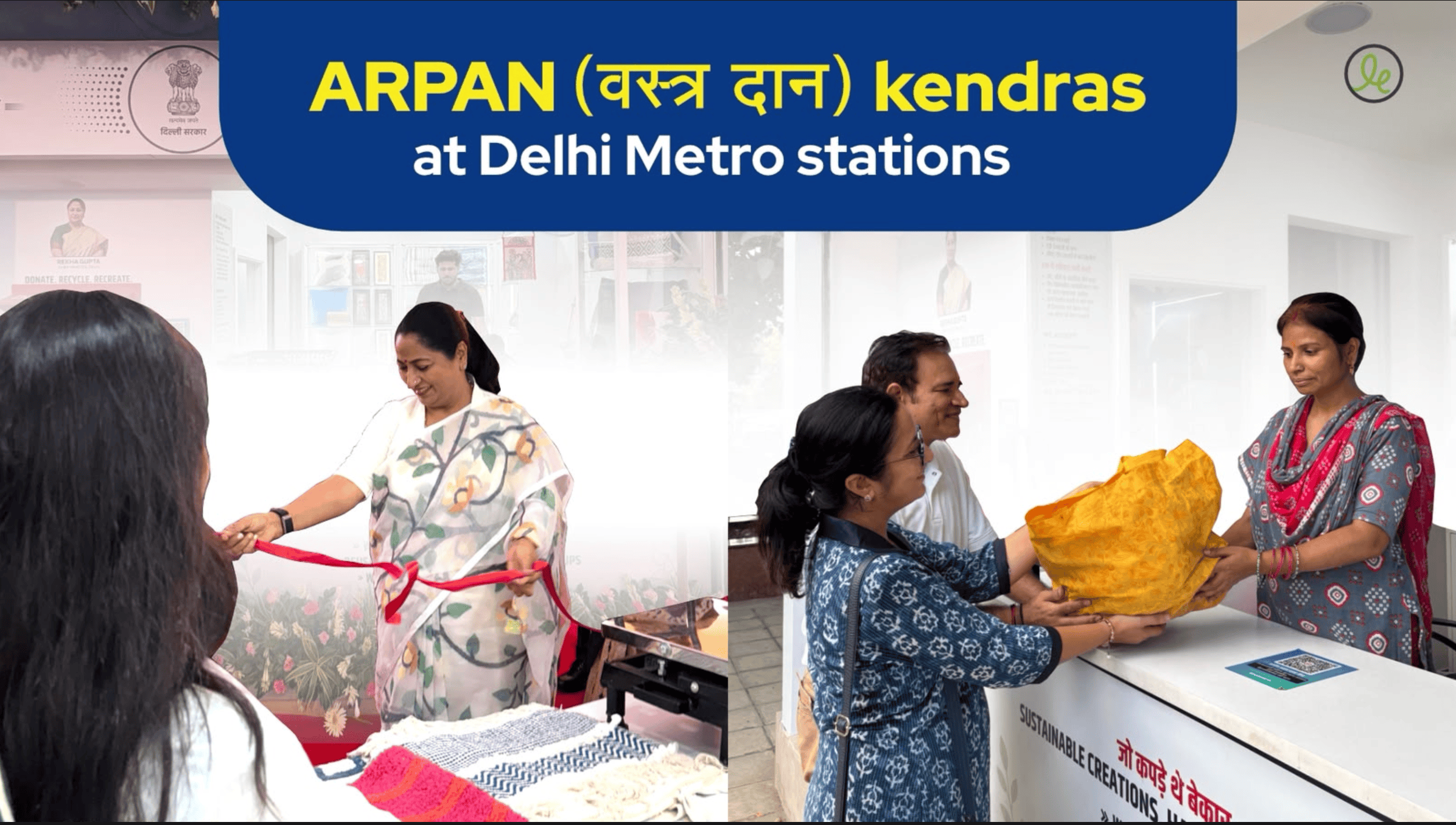
This became the foundation of Arpan Kendra.
Located at the metro station, these collection centres offer people an easy place to give their clothes a second life. Instead of becoming waste, every donated garment enters a system which has been designed for convenience and maximising the sustainable value.
The clothes first go through a sorting process and the ones deemed in good condition and redirected towards donation centres. Clothes that are too worn out to be used again are carefully separated and sent for recycling instead of being discarded.
This is where the initiate begins to create value beyond waste management.
This upcycling is done by women self help groups who transform this into decor, bags, carpets and other useful products. Materials that would have otherwise occupied landfill space become new sources of income, allowing waste to generate livelihood .
This acts as a bridge between households, communities, recyclers and artisans. This creates a channel which ensures that discarded clothes continue to circulate in the economy instead of ending their journey at the landfill.
The impact is as follows:
- Wearable garments find new owners instead of being discarded.
- Damaged textiles become material for up cycling.
- Women self help groups earn livelihood.
- Citizens begin to embrace a sustainable lifestyle.
This initiative launched by the government of Delhi found Respun as their implementation partner. Owing to their experience and the solutions to promote a circular economy, respun brings together infrastructure, technical expertise and partnership.
At its heart, this initiative is built upon one belief: the end of a garment’s life does not have to be the end of its story. Textile waste should be in a circular movement through the economy and this should be supported by the right systems we build at Respun.